What Happens When We Stop Thinking for Ourselves?
When we let tools do all the work, our own skills begin to fade. Learn how to protect your judgement, curiosity, and human connection in an automated world.
John Bennett
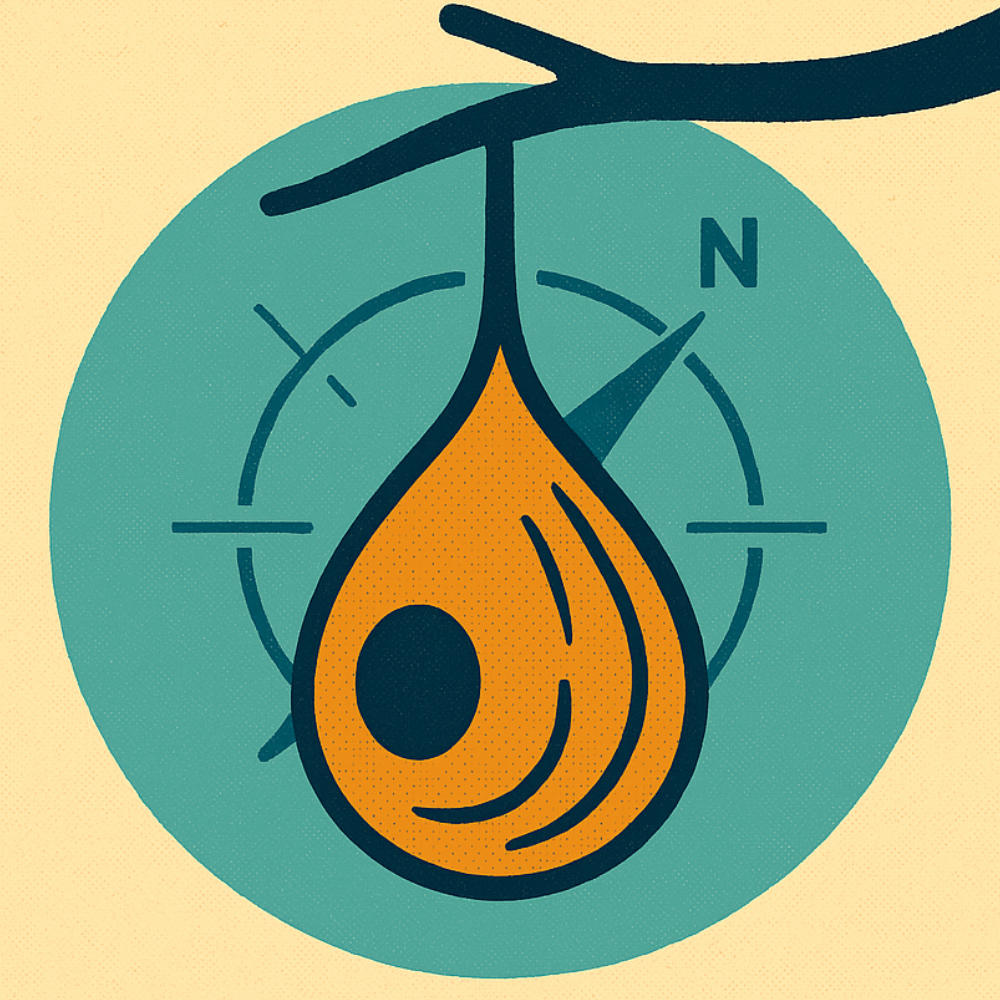
In Tsavo West National Park, Kenya, weaver birds build their nests on the west side of trees, to shelter from the prevailing winds that come from the east. If we know this, then we can use the position of the nest to work out which way we are facing, and so walk in the direction that we want to.
Our ancestors used knowledge like this, long before there were maps or compasses. This knowledge has been lost to most of us, although there is hope for its future preservation in the wonderful work of Tristan Gooley.
In a world where smartphones are everywhere, even the ability to read a paper map is diminishing. Our ability to navigate without devices is being eroded by "skill atrophy", where our skills decline through lack of use.
What if we stop thinking?
If we stop regularly using our thinking skills, will these decline too? If we put minimal effort into writing a prompt for an AI tool, and simply copy and paste the results, how long will it be before our ability to reason declines? If we rely on AI to summarise documents, will we lose the ability to do so ourselves?
It might not be a rapid decline. But if we continually defer to AI without applying critical thinking and reasoning, ultimately our abilities will start to suffer.
This is why it is essential to stay active when using AI, to properly clarify our intent, and apply our human expertise, knowledge and common sense to outputs. We must engage throughout, understand the results, and take accountability for them. The framework provided by the HAHAH Method is one way of helping us remember to do this.
Don't lose connection
My friend, Lauris, recently explained to me his own concern about what we stand to lose if we rely on AI too much. He'd asked ChatGPT its opinion on a social question, and engaged in a good conversation.
But it occurred to him that if we turn to AI to discuss our relationships, our plans for the future, and our worries, will we ultimately get out of the habit of having these conversations with our friends? Will it become easier to just ask ChatGPT than engage with another human?
Protect what matters
Just like GPS, AI is here to stay and is likely to play an increasingly significant role in most people's lives. So how can we protect our ability to think and make connections? Here are a few ideas to try:
Question every answer. Don't just accept the responses that AI gives you. Stop to consider what assumptions the answer makes, what it might be missing, and whether it fits your situation.
Get physical. Make notes, jot down ideas, or doodle a sketch of what you are working on (don't worry if it's messy). Use different ways to work through ideas other than typing prompts.
Keep a record of what works. Note down the times when AI has been useful, and how you made that happen. And also the times when it didn't work. Keeping this awareness and reflecting on it will help you stay sharp.
Do some things the hard way. Read a whole article and summarise the key points, rather than pasting it into ChatGPT. Write a blog or social post from scratch. Or put away your phone and find your way from a map, or even a natural sign! Making the effort is like a workout for your brain.
Have real conversations. Talk your ideas through with a friend or colleague. Have people question your logic or try to change your mind. Conversations can broaden your mind in a way AI never can.
The more clearly you see the limits of AI, the more you will be able to use it in ways that add value and complement your thinking.